Russia claim their forces have killed 2,000 Georgian military and civilian personnel. Such is war. In what other area of human endeavour could you get away with "claiming" to have killed so many people? In day to day life killers do all they can to avoid being blamed for their killing: arrests are evaded; are criminal indictments are defended vigorously.
Such is war, which has a habit of turning normal conceived wisdom up on its head, which is why it should be avoided at all costs.
Sunday, August 10, 2008

Tuesday, July 22, 2008
Benicassim Festival 2008: Some reflections
It may have been pretty much impossible to get a proper sleep(-in) in the tents, as curled up underneath a sheet of polystyrene is not the best place to be when tempertures climb into their thirties first thing in the morning. However the good thing about the Festival Internacional de Benicassim was that acts not starting til the evening was there was plenty of time to catch up with the kip at the beach during the day.
Wednesday, June 11, 2008
Three, actually four, observations on Lisbon
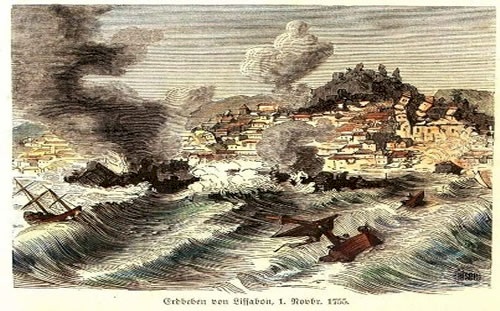
1. It suffered a horrific earthquake in 1755, during Voltaire's lifetime - a poster depicting said earthquake lives on to this day in one of the language labs in UL.

2. It is the capital city of one of the darker horses of Euro 2008, who are looking very dark at the moment, if darkness equates to looking incredibly impressive indeed after tonight's performance. Less can be said about Football365's sub-editor for the opening paragraph of their report on the game.
3. The Lisbon Treaty campaign, if you were to believe some of the more hysterical analyses of it, has been a mixture of either misinformation from the No campaigners, or bullying/guilt-tripping from the Yes campaigners, and plenty of patronising from all concerned - so which ever offends you less, being bullied or lied to, vote with them. See, for instance, some of the comments responding to David McWilliams' rather excellent commentary on the makeup of the Yes and No camps in today's Irish Independent.
4. On the Lisbon Treaty Referendum Count Centre in Limerick: this will be the University of Limerick Sports Arena. In other words the arena where I was due to play indoor soccer this evening, which was to my first game back after a prolonged absence - I believe March was the last time I kicked a luminous yellow ball in anger. Why should hundreds of (possibly apolitical) sportspeople be put out because of a treaty that doesn't really worry all that many of them? Surely there are other disused buildings in Limerick that could have been chosen - how about the former Microtherm factory building in Bruff Co Limerick, whose ex-employees featured in a recent RTE documentary, Where's My Job Gone? Or would that be sending out the wrong signals?
2. It is the capital city of one of the darker horses of Euro 2008, who are looking very dark at the moment, if darkness equates to looking incredibly impressive indeed after tonight's performance. Less can be said about Football365's sub-editor for the opening paragraph of their report on the game.
3. The Lisbon Treaty campaign, if you were to believe some of the more hysterical analyses of it, has been a mixture of either misinformation from the No campaigners, or bullying/guilt-tripping from the Yes campaigners, and plenty of patronising from all concerned - so which ever offends you less, being bullied or lied to, vote with them. See, for instance, some of the comments responding to David McWilliams' rather excellent commentary on the makeup of the Yes and No camps in today's Irish Independent.
4. On the Lisbon Treaty Referendum Count Centre in Limerick: this will be the University of Limerick Sports Arena. In other words the arena where I was due to play indoor soccer this evening, which was to my first game back after a prolonged absence - I believe March was the last time I kicked a luminous yellow ball in anger. Why should hundreds of (possibly apolitical) sportspeople be put out because of a treaty that doesn't really worry all that many of them? Surely there are other disused buildings in Limerick that could have been chosen - how about the former Microtherm factory building in Bruff Co Limerick, whose ex-employees featured in a recent RTE documentary, Where's My Job Gone? Or would that be sending out the wrong signals?
Thursday, June 05, 2008
Do as we say, not as we do
This morning's UK Independent ran a front page story about a secret deal to keep Iraq under US control indefinitely.
Rewind to February 2003. I believe President Bush said one of the reasons for the invasion of Iraq in the first place was to foster democracy there.
Rewind to February 2003. I believe President Bush said one of the reasons for the invasion of Iraq in the first place was to foster democracy there.
"The US is adamantly against the new security agreement being put to a referendum in Iraq, suspecting that it would be voted down."

Image: US Marines in Iraq, Wikimedia Commons
Wednesday, June 04, 2008
Economic Aches
Last Saturday night I was told by a friend me that The Economist told him that Ronald Reagan once told whoever would listen that inflation is “as violent as a mugger, as frightening as an armed robber and as deadly as a hit-man.” In these gloomy economic times, with FÁS predicting losses of 55,000 construction sector jobs by the end of 2009, when the credit crunch seems to be to property portfolio-holders and young house-buyers what “Post 9/11” was to civil liberties fans and Guantanamo Bay detainees, it is worth spending some time mulling over some of the grimmer scenarios for the Irish economy.
The construction boom, upon which much of Ireland's recent economic growth was based on, according to some commentators, appears to be over. The country is dotted with housing estates that appear to be left unfinished as their builders go bust. Anecdotally, I know of one auctioneering firm whose staff size has fallen to a third of what it was last year while their monthly sales income has decreased by a factor of nine.

One point I took from May 24th's lead story in The Economist is that while inflation per se may not be all that high, employees' perceptions of inflation can become higher and this in turn leads to higher wage demands. As there is no sign of us seeing any decrease in the number of inflation related headline stories between now and the national pay talks, it is a near-certainty that public and semi-state sector employees will push for wage increases. They may even be granted the rises, with the help of collective industrial action. Joe Private Sector Employee will see what his public sector counterpart was doing and will naturally follow suit.
And how will the multinational employer of JPSE react when himself and his colleagues begin to strike? Will they negotiate? Maybe. Will they accede to the JPSEs' demands? Doubtful. You can bet your bottom devalued dollar that JPSE's job will be outsourced offshore to a land with lower wages and less collective bargaining power. Even though according to the European Restructuring Monitor only 8% of EU jobs lost to restructuring between 2003 and 2006 have involved offshoring, this figure is likely to rise, at least in Ireland's case.
'Inflation' photo by Joshua Davis
Futbol Mondial's FIFA 2008 Fanatics
Futbol Mondial is a great programme at the best of times, with the offering from the Trans World International stable normally bringing us such delights as the Asian Champions League, how an Ecuadorian footballer copes with life at Wigan Athletic and Tomas Brolin – life after football. However, I was left feeling a little disturbed by the last item they ran on tonight's show. After running a perfectly pointless, if perfectly enjoyable and fairly nostalgic story about a Romanian all star select playing against the World in a charity match organised by Gheorge Hagi and Gica Popescu in Bucharest recently, they went and spoiled it all by bringing us a report on, wait for it, the FIFA Interactive World Cup held in Berlin at the end of May. The competition featured 32 young men (they were all young men) each of whom possessed a pair of eyes normally only seen on ordinary people at the end of a very long week of caffeine-fuelled exam cramming. Their skin complexions paled in comparison.
Wednesday, May 21, 2008
Why I'm glad I'm not a British taxpayer
Just spotted this entertaining stream of consciousness on the ever insightful, always amusing, Football365 Mediawatch page.
 Above: Joseph when he was still a free man, a model athlete it has to be said.
Thought For The Day
Joey Barton plays for Newcastle, Newcastle are sponsored by Northern Rock. 'The Rock' are now owned by the taxpayer - in other words, us. Therefore we pay Barton's wages. In addition to this he is now being held at Her Majesty's Pleasure so not only are we paying his wages, but we are also paying for his accommodation.
 Above: Joseph when he was still a free man, a model athlete it has to be said.
Friday, May 16, 2008
Out of Africa: not much hope, but a good read all the same
The State of Africa: A History of Fifty Years of Independence
Martin Meredith
A Book Review
Of all the regions in the world, Africa is one were economic reports regularly show that standards of living have actually decreased there in the past thirty years rather than increased. Right now there are more armed conflicts there than in any other continent. It seems that the news reports to emerge from that region, be they about famine in the 1980s, resource wars in the 1990s or tales of the scourges of AIDs and election manipulations more recently, are reports of misery. In this expansive history, Martin Meredith, an academic who previously worked as a journalist with the Times of Zambia and has published an acclaimed biography of Robert Mugabe, chronicles the events over the past fifty years that have brought this sorry state of affairs into being.
The task is an ambitious one – to chart the history of a whole continent over fifty years. While the book may not go into the same level of detail as a history of an individual country or historical figure, it nonetheless illuminates trends that were common to one degree or another in many of the countries in the years following independence.
The book is broken up into four sections. The first tells the story of the immediate post-independence era, when the rhetoric of the politicians of the newly independent countries was full of optimism. Meredith paints vivid biographies of leaders such as Kwame Nkumrah of Ghana and Nasser of Egypt, in which their confidence shines through. This honeymoon period did not last for long though – the optimism of the early 1960s soon faded when it transpired that the freedom fighters, once they had gained power, where not all that keen on holding free elections, risking losing that power. In the second part of the book the author writes of the various schemes used by ageing leaders across the continent to stay in power, from repressive measures to political cronyism. He writes about the vast prestige projects leaders invested in, such as Ghana's national airline whose only passengers were the politicians who had sanctioned setting it up even there was no demand from the public. One trend that seems to be common to nearly all of the newly independent countries was the setting up of huge state bureaucracies – not with the inte
As the book moves into the 1980s, the picture becomes bleaker. There are stories of coups and counter-coups from Nigeria to Uganda. Economic growth rates declined, as countries struggled to pay off debts that had been acquired in the 1970s. Indeed, in his chapter on the Ethiopian famine of the 1980s, he notes that that decade is often referred to there as “The Lost Decade.” From the 1990s to the present day it seems that time and time again the people of Africa have been let down by those in power: the genocide in Rwanda, the South African government's inept response to its AIDs crisis and recent bloodshed in Darfur are all examples Meredith cites.
While there are some grounds for optimism Meredith outlines, on a whole this is quite a depressing book. However, the author's straightforward, logical and chronological style provide a great context for Africa's current problems. Essential reading for anyone who wants insight into the politics and current affairs of Africa.
Did I go to any of the gigs mentioned below?
No.
Why not?
Because the best laid schemes o' Mice an' Men gang aft agley. Also I forgot about the Utah Saints gig.
Why not?
Because the best laid schemes o' Mice an' Men gang aft agley. Also I forgot about the Utah Saints gig.
Thursday, April 24, 2008
Thou Shalt Always try to go to good gigs...
...if you have the time, money and interest I suppose.
The good people at the Limerick Post dropped a copy of their paper in our letterbox today. It informed me that there are three gigs over the coming weeks that I might like to go out and see. Feel free to come along if you want to too.
1. Dan le Sac Vs Scroobius Pip
Friday 9th May at 9.00pm
Seomraí na Trionóide, Cathair Luimnigh.
They brought us "Thou Shalt Always Kill" last year, which enjoyed a spell as my bebo flashbox a few months back, after I saw same on the page of one Will Storan, who has an ear for decent music if I may say so. Which brings me to the whole reason for me creating this post: the chance to put the video for "Thou Shalt Always Kill" on my blog.
More info should be on the Trinity Rooms' website. Incidentally, I'm really fond of the track that plays when you open their site. Does anyone know what it's called?
They come from the same Essex town that Joseph "Heart of Darkness" Conrad once lived in. This brings me nicely to the main reason I have for posting this evening, basically to try and embed a youtube music vidjo into my blog for the very first time. Here goes, ladies and gentlemen, I give you "Thou Shalt Always Kill" by Dan Le Sac vs Scroobius Pip:
2. Utah Saints
Saturday 3rd May also at 9.00pm
And also at the Trinity Rooms, Limerick.
The lads from the days of X-Worx jeans, Petro Motion jeans and grafitti stating the equation "XTC=NRG" will hopefully have a great set, 1992 style.
3. Rufus Wainwright
Sunday 8th of June at 8.00pm
University Concert Hall
The Montreal Minstrel of Misery brings his show to UL, should be good. I'm sure there's a lot more to him than that - I have one cousin and had one taxi-driver who were mad into him, so I'm sure with a bit of pre-concert homework I should be able to form an opinion on him.
Surprise Sur-Bloody-Prise
It appears that the first results of the recount have gone to Robert Mugabe.
Suppose Martyn Turner was spot on, as he often is, when he sketched this cartoon a few weeks ago:

Speaking of inflation, here's a bit of trivia:
Zimbabwe currently has an inflation rate of 150,000%, but this is moderate compared to historical figures. For example in Hungary at the end of the Second World War, inflation was 41,900,000,000,000,000% which meant that prices doubled every 15 hours...
(E-mail received from Bolger, D., 26 February 2008).
Suppose Martyn Turner was spot on, as he often is, when he sketched this cartoon a few weeks ago:
Speaking of inflation, here's a bit of trivia:
Zimbabwe currently has an inflation rate of 150,000%, but this is moderate compared to historical figures. For example in Hungary at the end of the Second World War, inflation was 41,900,000,000,000,000% which meant that prices doubled every 15 hours...
(E-mail received from Bolger, D., 26 February 2008).
Sunday, April 20, 2008
What I learnt today
Michael O'Leary has some Neck. I didn't learn that today, that fact has been in the public domain for long enough. However I did learn about what he did in the wake of the Aer Lingus flights for a fiver fiasco, courtesy of this snippet from Sue Denham/pseudonym in today's Sunday Times:
Would have loved to see the photos. Just goes to show that the company who have brought us this:

... and who last August put this on their homepage to protest the introduction of strict anti-terror procedures:

...and who this February had to pay damages to Monsieur et Madame Sarkozy for this:

... have not changed one jot. Interestingly the Advertising Standards Authority dismissed complaints about the Martin McGuinness ad - topical humour was allowed to be topical humour.
Thanks to larryni.me.uk for the images.
Ryanair's Michael O'Leary couldn't wait to dump on Aer Lingus when it was forced to do a PR u-turn and honour the bookings of customers who had taken advantage of a pricing error to buy €5 tickets to New York. O'Leary dispatched a flight crew to Dublin airport carrying placards reading "champers for unhappy campers" to hand out flutes of champagne to passengers waiting to board an Aer Lingus flight. Unamused Aer Lingus staff called airport security who ordered Ryanair's photographer to delete all images as it breached Aer Lingus's copyright. Spoilsports.
Would have loved to see the photos. Just goes to show that the company who have brought us this:

... and who last August put this on their homepage to protest the introduction of strict anti-terror procedures:

...and who this February had to pay damages to Monsieur et Madame Sarkozy for this:

... have not changed one jot. Interestingly the Advertising Standards Authority dismissed complaints about the Martin McGuinness ad - topical humour was allowed to be topical humour.
Thanks to larryni.me.uk for the images.
Friday, April 11, 2008
Sympathy for the Duvel
Bernard Werber is a French science fiction writer. He used to be a journalist. According to Wikipedia, son œuvre fait se rencontrer mythologie, spiritualité, philosophie, science-fiction, biologie, futurologie, logique ainsi que des données scientifiques peu connues.

Some of his books take the form of mini-encyclopaedae (is that the plural? how am I to know?), where he basically just takes a rake of random enough topics (but usually in some way connected with mythologie, spiritualité, philosophie, science-fiction, biologie, futurologie or logique) and writes articles on said topics. Not necessarily definitions, just articles/essays that are in some way linked to them.
In L'Encyclopédie du Savoir Relativ et Absolu, this is what he had to say about Solidarité, and I'd happen to think that he is pretty much spot on in what he says:
With a bit of copying and pasting and Google Translating what we get is this:

Some of his books take the form of mini-encyclopaedae (is that the plural? how am I to know?), where he basically just takes a rake of random enough topics (but usually in some way connected with mythologie, spiritualité, philosophie, science-fiction, biologie, futurologie or logique) and writes articles on said topics. Not necessarily definitions, just articles/essays that are in some way linked to them.
In L'Encyclopédie du Savoir Relativ et Absolu, this is what he had to say about Solidarité, and I'd happen to think that he is pretty much spot on in what he says:
Solidarité
La solidarité nait de la douleur et non de la joie. On se sent plus proche de quelqu'un qui a subi avec vous une épreuve pénible que de quelqu'un qui a partagé avec vous un moment heureux.
Le malheur est source de solidarité et d'union alors que le bonheur divise. Pourquoi? Parce que, lors d'un triomphe commun, chacun se sent lesé par rapport a son propre mérité. Chacun s'imagine etre l'unique auteur d'une commune réussite.
Combien de familles se sont divisées a l'heure d'un héritage? Combien de groupes de rock and roll ont pu rester soudés malgré leur succes? Combien de mouvements politiques ont éclaté, le pouvoir pris? Étymologiquement, le mot sympathieprovient d'ailleurs du grec sumpatheia qui signifie souffrir avec . De Meme compassion est issu du latin compassio signifiant lui aussi souffrir avec .
C'est en imaginant la souffrance des martyrs de son groupe de référence qu'on peut un instant quitter son insupportable individualité. C'est dans le souvenir d'un calvaire vécu en commun que résident la force et la cohésion d'un groupe.
With a bit of copying and pasting and Google Translating what we get is this:
SolidarityWise words, je pense.
Solidarity is born of pain rather than joy. You feel closer to someone who has been with you a painful ordeal as someone who has shared with you a happy event.
The tragedy is a source of solidarity and unity while happiness divides. Why? Because, in a triumph, everyone feels compared lesé has its own deserved. Everyone imagines to be the sole author of a common success.
How many families were divided at the time of an inheritance? How many groups of rock and roll have been able to remain united despite their success? How many political movements have erupted, the power taken? Etymologically, the word sympathyalso comes from the Greek meaning sumpatheia which means to suffer with . Similarily, compassion comes from the Latin compassio, which also means to suffer with.
In imagining the suffering of the martyrs of the reference group for a moment that we can leave her unbearable individuality. It is in the memory of the suffering endured in common than residents of force and cohesion of a group.

Why I like The Economist

For a while now I have subscribed to The Economist. There are numerous reasons why. In this post I will attempt to outline some of them.
- Its highly divisive, yet eloquently expressed opinions.
- The fact that it consistently refers to itself as "this newspaper", and does so in the third person.
- The random one-off articles it contains, such as the state that picture-book publishing is in at this moment in the UK, how the poker world is becoming more dominated by youngsters who have only ever played internet poker, or the trials faced by Native Americans who want to go into business in Native American nations in the US of A. In other words, the kind of articles that you won't really find elsewhere, yet if you met someone who had a particular interest in whatever topic was the focus of the article, you would be able to hold a 10-15 minute rational conversation on said topic with the aforementioned someone.
- The fact that they rarely use words like aformentioned.
- And the fact that most of their articles concerning actual economics go way over my head.
- Their blatant anti-EU bias, at times.
- The photos they choose, and the captions therewith. An example: in an article a while back on declining suicide rates in the UK, they featured a picture of some cliffs. The caption: "Not seeing much action lately."
- The ads. Either in the recruitment section: "You will be qualified to a PhD level and have up to 10 years experience managing some ridiculously high-level other people at some really high level in another organisation so why you would want to bother seeking a job in the recruitment section of a magazine is beyond most people. The other ads, that just presume the entire readership is made up of top-level executives who wouldn't know what to fly economy was if it hit them in the face. A tad ironic that, given the fact that it's called The Economist.
- The fact that the Middle East is lumped in with Africa. And Canada is lumped in with Latin America. Is this an indication of the level of respect "this newspaper" holds said regions/countries in?
- Their choice of fonts/page layouts.
Thursday, January 31, 2008
Ovestating the Case
While much has been said in the media, both locally and nationally, about the regeneration of certain troubled areas of Limerick on foot of the Fitzgerald Report's findings, less column inches have been given to the rejuvenation of Thomas Street in the city centre. Well at least that was the case until this evening, when it made the front page of the Limerick Leader.
Apparently, Thomas St traders are not too happy with the construction works, the proprietor of a health food shop said her turnover for this month is down 14% compared to January 2007. In actual fact, as I walked up the street towards college this morning, watching the shopkeepers set up shop for the day, I couldn't help thinking that they were due for a very quiet day indeed. That is the consequence of your whole street undergoing a temporary dredging as part of the construction process I suppose.
However, I found the article to be somewhat unclear, if not misleading. The paper reports that shop owners have said that the pedestrianisation of the street has badly affected trade in the area. In the article itself, all the shopkeepers quoted run businesses on upper Thomas Street, in other words the part of the street where roadworks are ongoing at the moment, rather than the lower part of the street, where it has been fully pedestrianised for some months since work finished last year. I found no indication in the article whether the retailers were referring to the pedestrianisation in progress or the area with completed pedestrianisation as being what hinders their trade. Regarding the latter area, I have found that most people I meet, both from Limerick and further afield have greeted its development with nothing but positive comments.
This brings me down to the subject of the post's heading. 'It would be easier to run a business in Beirut than Thomas St' was a comment ascribed to one particular trader. How? Beirut is a city engulfed in violence at the moment - at least eight people have been killed in deadly riots over power and water cuts in recent days; on 15 January a bomb exploded near the US Embassy, killing three people. I think to try to compare their temporary plight while their street is being spruced up by City Council to that of their Lebanese counterparts in this time of strife is a bit disingenuous.
As I say in this post's title, the person who made those comments was simply overstating the case.
Tuesday, January 29, 2008
Viva la Resolution, thanks to Nike and iPod!
The market leaders in mp3 portable music players, Apple iPod, have teamed up with sportswear giant Nike, to bring out the latest piece of technology for the gadget-savvy jogger. Known simply as the ‘Nike + iPod Sport Kit’, it consists of a pair of Nike runners that have been modified to contain a pedometer with a wireless sensor, and a sensor that this communicates with which is attached to the jogger’s iPod. As you go on your run, you will hear periodic progress reports through your headphones, telling you your pace and distance of your run. Users can also get the player to select specially chosen motivational music to go the extra mile. It will even congratulate you when you reach your personal best!

The device went on the market before Christmas. According to a Nike spokesperson, the manufacturers hope to appeal to both the seasoned runner and the novices who will be setting out on their New Years Resolution-inspired first forays this January.
The gadget review website, Engadget.com, was glowing in its review, saying that the product matches up to its advertisements’ glowing descriptions, and, ‘it actually motivated the reviewers to run harder and more often than normal.’
Runners can buy the device directly from Apple’s website, although another blogger, who professes more than a respectful admiration for all things ipod-relatd, advises that with a tiny bit of DIY know-how and some Velcro, you can forego shelling out for a new pair of Nike runners!
Thursday, December 20, 2007
Kneejerk Reaction to some recent news stories

Adjective
kneejerk
- Of a reply or reaction, automatic and easily predictable; reacting spontaneously in the expected manner.[1]
This evening, Newstalk reported the following:
Falling employment in the construction sector can be an opportunity for Ireland - that's according to Enterprise Minister Micheal Martin.
Speaking in Dublin at the launch of the Fas annual labour market review the minister said the slowdown in house building gives us the chance to help wean our economy off its dependence on construction.
You can read the full story here.
(My emphasis added).
Now if this isn't the biggest example of Doublespeak since Kevin Keegan told us that yes, David Batty would comfortably slot his penalty home against Argentina back in 1998, well then I don't know what is. Or maybe it isn't Doublespeak, but it's something similar.
How can huge job losses in the construction industry be presented as an opportunity or a chance? How come this chance is only presenting itself now? Surely there were plenty of opportunities to "wean our economy off its dependence on construction" a few years ago when the sector was genuinely booming. Why wasn't the chance grabbed then?
On 27 November, two stories in The Irish Times caught my eye. They were both in the international section. The first was in the 'other stories' sidebar:
Bin Laden to address Europe
DUBAI - Al Qaeda leader Osama bin Laden will address the people of Europe in a message to be posted on the internet "soon", an Islamist website said yesterday.
"Soon, God willing, [ we will post] a new message to the European people from the lion Imam who defeated the Americans and tyrants, Sheikh Osama bin Laden," said the pro-al Qaeda website which regularly posts messages from the militant leader. - (Reuters)
When were the Americans and tyrants defeated by Sheikh bin Laden? Is he referring to attacks on US soldiers in Iraq? The killing of civilians in Manhattan? By his reasoning, does killing a number of US citizens equate with defeating the whole US nation? By the same logic, can I claim to have beaten John McEnroe in tennis, because I have beaten a tennis player before, so therefore I have beaten all tennis players, so therefore I have beaten John McEnroe?
On the same day, Lorna Siggins of The Irish Times reported on a speech given by an Indian journalist, Palagummi Sainath, at Irish Aid's conference in NUI Galway. According to Siggins, he laments the media's role in propping up rampant corporate power. He said that:
'EU subsidies to Irish and other European farmers are having a "devastating" effect on farmers in India and Africa.'Regarding this devastating effect, Jeffrey Sachs, in 'The End of Poverty' had some things to say about EU protection of EU farmers in the context of global inequality. Sachs argued that the tarrifs are in place to protect EU food producers from the large food producers of North America, New Zealand, Australia and Argentina. Where the barriers to come down, chances are that it would be those markets who would gain the most, rather than the less developed Indian and African ones.
Picture: University of Miami Department of Biology
Wednesday, December 19, 2007
Seven Mile Run
What is the point in having a few links to some (presumably useful) websites to the left of my blog postings if I’m not going to give some background on each of the websites?
That is a matter open to debate. Anyway, without further ado, I would like to extol the virtues of Mapmyrun.com.
The website is very user-friendly, and does exactly what it says on the address bar. Instead of using the tried and trusted secondary school geography class trick of an Ordnance Survey map, piece of paper and a ruler, users can now plot out routes (for running, walking, cycling, whatever-your-having-yourself) on maps of any location in the world, to calculate the distance of their run, walk, cycle or whatever-their-having-themselves.
I was pointed to the site in one of The Irish Times’ soccer correspondent, Emmet Malone's articles in which he detailed his preparations to run last October’s Dublin Marathon. This is what he said of the site:
The most straightforward website is mapmyrun.com , an easy to use site that allows you to mark out, record and share training routes in any location. Other features (these require free registration) include a training log, in which you can record every aspect of marathon build-up from distances and times to calorie intake and weight loss.
To cut to the chase, a couple of months ago I decided I would attempt a marathon myself, some time in Spring 2008. I spoke to a friend of mine, a veteran of one-and-a-half marathons, and he suggested running a half-marathon in January, in order to get his tally up to two but also as a preparation for a full one. So back onto Google I went, and found out about the Genk Half-Marathon, which is taking place in the town of
Started at my house, then went to Ivan's, up by Thomond Park, right along Clancy Strand, crossed Sarsfield Bridge, down the steps, left up to Henry Street at Jury's, up along South Circular Road past Mary I, down Courtbrack Avenue, turned right passing heavy traffic, lots of trucks on the Dock Road, over the New Bridge, along the lower North Circular Road and home. Less than a month to go. In future I think I'm gonna try and avoid the Dock Road, you may as well put your mouth up to a truck's exhaust pipe and inhale.
Saturday, December 15, 2007
Student Life in Limerick
What do the general public of Limerick think about students from their dealings with them? What do students themselves feel Limerick has to offer? Have a listen here.
Limerick has quite a high ratio of full-time students to the city’s total population. There are at least 15,000 full-time students here. However, perhaps due to the biggest third-level institution, the University of Limerick, being located on the outskirts of the city – in actual fact, it is in fact outside the city boundaries, in Limerick County Council’s administration area – sometimes people don’t associate Limerick with being a ‘university town’, in the same manner that, say, Galway is often considered.
Backing track used: The Skin of My Yellow Country Teeth by Clap Your Hands Say Yeah
Photo: Tony Bracjun

In recent years, many articles have been published in the media about Limerick’s development taking the shape of a ‘doughnut’ - in other words, while there is much investment in the outskirts of the city, the city centre itself is losing out. The Irish Times reported this week that ‘retail values in
Backing track used: The Skin of My Yellow Country Teeth by Clap Your Hands Say Yeah
Photo: Tony Bracjun
Subscribe to:
Posts (Atom)


Saying that, the walk to the beach was a hell of a trek and the shuttle buses that were advertised between the venue and the town seemed few and far between. We rented bikes which were very handy. Wouldn’t have liked to have been in Benicamp though - it seemed that before the festival many people had the impression from various internet forums that this was the best place, and indeed it filled up by Monday. From what I heard it was short of facilities and I wouldn’t have fancied the walk back there after the concert each night.
Had a great time, not sure if I would come back though, it would depend on the line-up really. It is a great idea though having the concerts start in the evening as it means your days are completely free. There was plenty in Benicassim to do, by plenty I mean the beach or the water park, which is fine by me.
Onto the music:
i) Sigur Rós were very good on the Thursday night. However, there seemed to be too many people in the crowd where we were acting up to the Brits Abroad Chelsea Dagger-loving stereotype, many of them acting way too rowdy for a Sigur Rós gig which was disappointing.
ii) Raconteurs were bloody fantastic. Very bounce-along-toable stuff out of the charisma-filled Jack White and his Nashville band. Old school rock and roll as it should be.
iii) Hot Chip were amazing. I was also amazed when I heard from my friend that soon after their set I gave him my pint, mumbled something to the effect of NO MORE and ran off. Next thing I could remember was waking up on the tarmac very close to where we had watched them at 6.30 - bear in mind they finished playing at midnight and Josh Wink and others were pounding out the choons 50 metres from me.
iv) Calvin Harris - did exactly what a very good dance artist should do, that is get the crowd hopping, not a beat was out of place.
v) Leonard Cohen - a true gent, highlight of the weekend. Very humble man, thanked all the members of his band individually, also repeatedly told us how it was a privilege to play for us. Pete Doherty, The Zutons, Amy Winehouse and others could learn from his refreshingly gracious attitude. Hallelujah alone made the trip worthwhile. As did chilling out by the beach all day, of course!
¡Adios amigos!